China Approves 8 New Nuclear Reactors: A US$25 Billion Build-Out and What It Does to Crane Demand
Eight reactor units, RMB 170 billion, and a quieter effect: heavy crane capacity and steel that industrial buyers compete against.
China's State Council approved eight new nuclear reactor units on July 31, 2026 — four projects worth more than RMB 170 billion, about US$25.2 billion, across Zhejiang, Guangdong, Liaoning and Shandong. That is a lot of concrete, but it is also a crane story. Every unit needs a polar crane inside the containment dome plus turbine hall overhead cranes, fuel handling cranes and dozens of auxiliary hoists, and China builds roughly half the world's overhead cranes. The nuclear program absorbs that capacity, and it pulls structural steel demand that keeps the steel-cost floor under every crane quotation from China. Here is what the build-out actually means for industrial crane buyers, and how to plan around it.
The State Council executive meeting, chaired by Premier Li Qiang, waved through construction of eight units in one batch — an unusually large single approval. Two of the four projects extend stations already under construction: Phase II of the Jinqimen plant in Zhejiang (units 3 and 4) and Phase III of the Taipingling plant in Guangdong (units 5 and 6). Both pairs are designated demonstration projects for Hualong One 2.0, the upgraded Chinese PWR design rated at 1,217 MW per unit. The other two are greenfield: Zhuanghe in Liaoning takes two standard Hualong One units, and Laiyang in Shandong takes two larger Guohe One units of 1,543 MW each — the first standardized batch-built project approved for that design (World Nuclear News, Aug 3, 2026; Construction Review Online, Aug 5, 2026).
| Project | Province | Units | Reactor design | Owner |
|---|---|---|---|---|
| Jinqimen Phase II | Zhejiang | 2 (units 3-4) | Hualong One 2.0, 1,217 MW each | CNNC |
| Taipingling Phase III | Guangdong | 2 (units 5-6) | Hualong One 2.0, 1,217 MW each | CGN |
| Zhuanghe Phase I | Liaoning | 2 | Hualong One, 1,217 MW each | CNNC Datang |
| Laiyang Phase I | Shandong | 2 | Guohe One (CAP1400), 1,543 MW each | SPIC |
The scale behind this batch matters more than the batch itself. Since 2022 China has sanctioned 49 reactor units with cumulative investment approaching RMB 1 trillion. The operating fleet stands at 59 commercial units totaling 62.5 GW, with 35 more units (41.9 GW) already under construction before this latest round. The national target is 110 GW of operating nuclear capacity by 2030 — which implies this approval rhythm continuing for several more years (Construction Review Online; Power, Aug 2, 2026).
More than most industrial buyers assume. The headline crane on every unit is the polar crane — a circular overhead crane that runs on a track inside the containment building, used to lift the reactor pressure vessel, steam generators and other heavy components during construction and refueling. Capacity is design-dependent: roughly 150-250 t for a Hualong One-class plant and up to 360 t for larger containment designs. Below the polar crane sits a second ring of equipment: turbine hall overhead cranes in the 100-400 t range, spent fuel pool cranes, equipment hatch cranes and a spread of 5-50 t auxiliary cranes and hoists through the auxiliary and turbine buildings.
| Crane type | Typical capacity | Location / job |
|---|---|---|
| Polar crane | 150-360 t | Containment building, circular track; RPV and steam generator lifts |
| Turbine hall overhead crane | 100-400 t | Turbine hall, generator and turbine maintenance |
| Spent fuel / cask handling crane | 50-150 t | Fuel building and dry cask storage |
| Auxiliary building cranes | 5-50 t | Pumps, valves, HVAC and maintenance bays |
| Gantry / special cranes | 20-100 t+ | Turbine hall assembly yards, heavy component staging |
Industry estimates put the crane and hoist content of a twin-unit plant at 20-30 heavy machines across the nuclear island, turbine hall and balance of plant — most of them engineered to seismic and nuclear-safety documentation requirements that ordinary industrial cranes never touch. The engineering hours per crane are multiples of a standard double girder crane, and that is exactly where the capacity squeeze starts.
China is not just building reactors; it is the factory floor for the global crane market. Chinese manufacturers produce a very large share of the world's overhead cranes, and when a nuclear program pulls their heavy-duty engineering capacity, fabrication floor space and structural steel into 5-7 year projects, the effect shows up in three places a regular buyer can feel:
1. Heavy crane lead times firm up. Nuclear polar cranes and turbine hall cranes are quoted in lead times of 18-30 months. Manufacturers that take nuclear work schedule it into the same fabrication bays that produce 50-200 t industrial double girder cranes, which pushes those deliveries out. The standard 1-20 t single girder lines are mostly separate and far less affected.
2. Steel demand gets a floor. The nuclear program is one of the few industrial demand streams growing through China's property-led steel downturn. Each reactor consumes roughly 40,000-60,000 t of steel across containment, structural and equipment packages (Industry estimates). That does not reverse the steel glut — but it is one more reason not to assume plate prices fall forever, and it supports the steel-cost component of crane quotes we discussed in our August analysis of Chinese steel prices.
3. Specialized crane engineering gets booked. Seismic-qualified, safety-class crane design is niche work. When design teams are consumed by nuclear documentation, the same teams that quote special industrial cranes — grab cranes, cleanroom cranes, high-duty process cranes — become slower to respond. For buyers of special cranes, early specification beats late inquiry.
The approvals are domestic, but the supply effect is global. Buyers in Europe, the Middle East and Southeast Asia who source heavy cranes from Chinese factories are, in effect, competing with the nuclear program for the same fabrication capacity and the same design engineers. The counterweight is the export channel itself: Chinese manufacturers continue to push CE-certified European-standard products abroad, and the export lines are generally separate from domestic nuclear delivery. In practice, that means standard-range cranes keep flowing, while the heavy, highly customized end of the market is where timing gets harder.
There is a second, less obvious global angle. The reactor designs being approved — Hualong One 2.0 and Guohe One — are also China's export products. Pakistan, Argentina and several Southeast Asian and Middle Eastern markets have taken or are evaluating Chinese PWR designs. Each export project carries the same crane content, which means the crane-demand story follows the reactor export pipeline, not just the domestic one (World Nuclear News).
Nuclear construction is a long game, and that is good news for planning. The benchmark San'ao unit 1 — a Hualong One in the same province as Jinqimen — reached first criticality on February 14, 2026, connected to the grid on March 12 and entered commercial operation at the end of April, five years and four months after first concrete. Taipingling units 1 and 2 entered commercial operation this year, unit 3 began construction in 2025, and first concrete for unit 4 was poured in May 2026. Crane procurement on each unit clusters around first concrete plus 12-36 months, when containment and turbine hall structures rise — which puts the heaviest crane demand from the July 2026 batch roughly in the 2027-2030 window, with auxiliary crane demand spreading into 2031-2032 (Construction Review Online; Power).
| Milestone | Timing (per unit) | Crane demand peak |
|---|---|---|
| Approval (July 31, 2026 batch) | Q3 2026 | Procurement starts |
| First concrete | 2026-2028 | Auxiliary cranes ordered |
| Containment & turbine hall erection | First concrete + 12-36 months | Polar + turbine hall cranes (heaviest) |
| Commercial operation | ~64 months after first concrete | Refueling cranes, long-term spares |
If you are buying a 50 t or heavier crane in the next 18 months, treat the nuclear build-out as a scheduling factor, not a headline. Concretely:
1. Add delivery buffer. Ask for committed delivery weeks rather than vague '16-20 weeks' language, and plan 4-8 weeks of contingency on heavy cranes through 2027.
2. Separate the steel question from the capacity question. Steel is low today; heavy fabrication capacity is tightening. Negotiate the steel block on price, and negotiate delivery on schedule — they are different conversations.
3. Lock price validity. A 30-60 day validity period converts today's steel environment into a firm number while your approvals run.
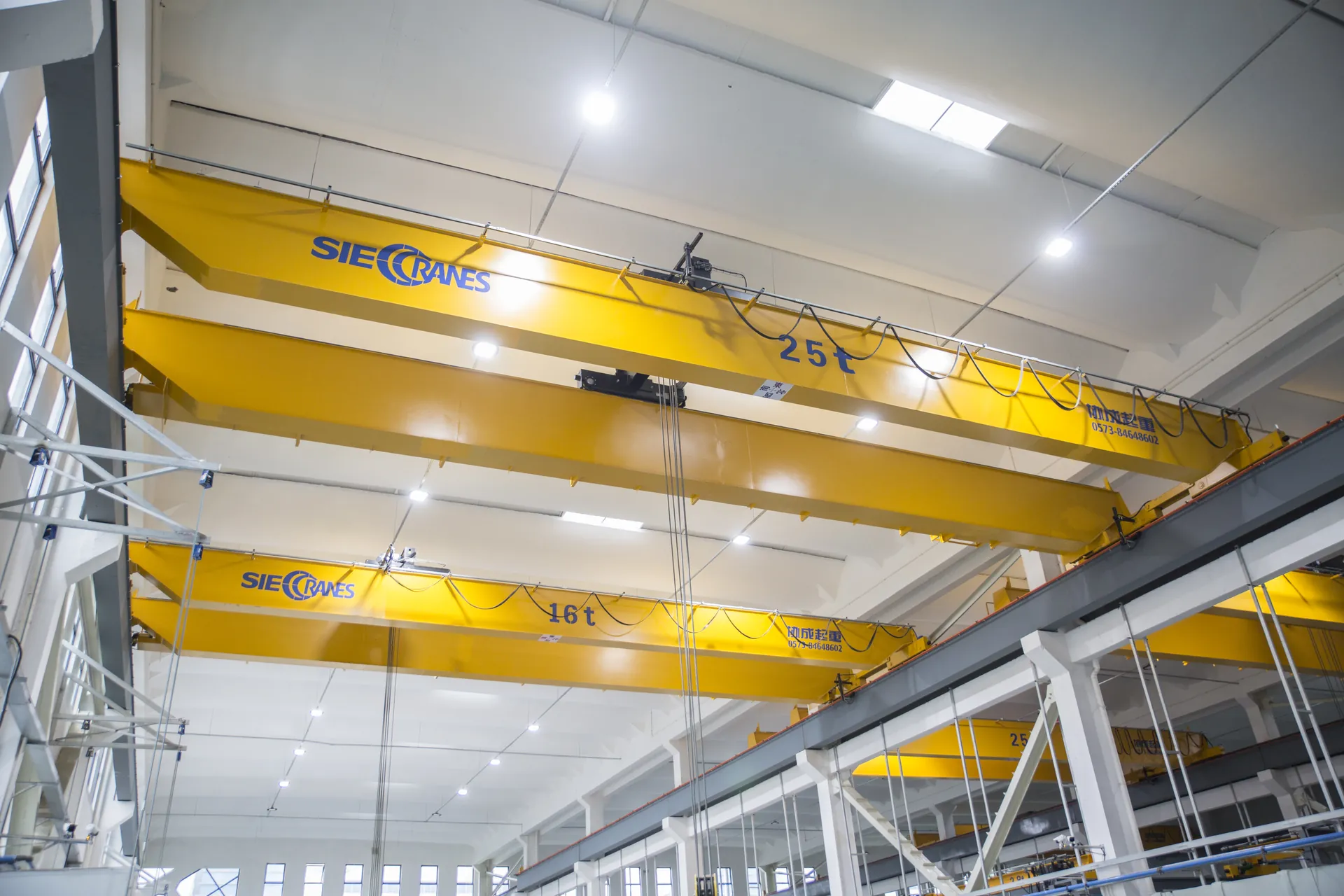
4. Consider suppliers with independent export lines. A CE-certified European-standard manufacturer that runs dedicated export production — like SIEC Cranes — is not competing with domestic nuclear delivery for your fabrication slots. We build single girder, double girder, gantry, jib and special cranes to CE and ISO 9001 standards with transparent lead times, and we do not put nuclear projects ahead of export customers.
China's eight new nuclear reactors are a US$25 billion program that will run into the 2030s, and every unit carries 20-30 heavy cranes. For standard-range industrial buyers the direct effect is mild; for heavy crane buyers it means firmer lead times, booked engineering capacity and a steel-demand floor under quotations. Plan delivery early, separate your steel negotiation from your schedule negotiation, and check that your supplier's export line is genuinely independent of the nuclear rush. The buyers who treat this as a scheduling signal now will not be the ones chasing capacity in 2027.
If you are planning an overhead crane purchase, send us your project spec — we will quote at today's steel market, itemize the cost blocks so you can audit them, and give you committed delivery weeks. From single girder to heavy double girder and gantry cranes, built to CE and ISO 9001 standards.
Contact SIEC Cranes for a transparent quotation with committed delivery weeks, CE certification and full export documentation. We supply European-standard overhead cranes — single girder, double girder, gantry, jib and special cranes — on independent export production lines.
Request a Quote →