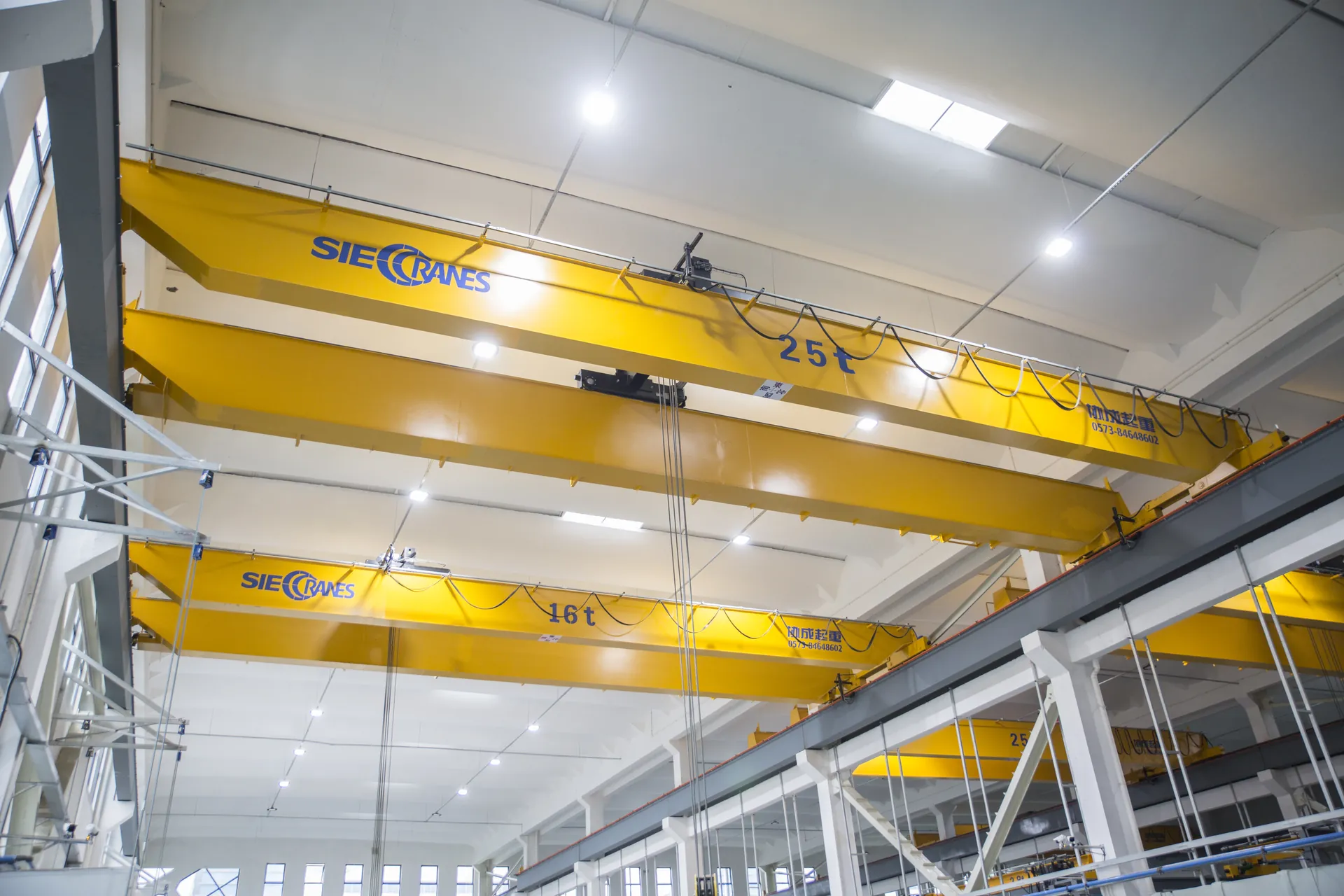
Smart Overhead Crane Technology 2026: IoT & Predictive Maintenance
IoT sensors, real-time data platforms, and AI-driven predictive maintenance are reshaping how factories manage overhead cranes. Here's what the technology looks like on the ground.
IoT-connected overhead cranes with predictive maintenance are the fastest-growing segment in industrial lifting — over 35% of new installations in Europe and North America this year. Companies that adopt smart monitoring cut unplanned downtime by 30–50% and maintenance spending by 10–40% in the first year (Industry estimates, 2025–2026). Here is the sensor tech driving the shift, the real ROI, and what to check when buying or upgrading.
A smart overhead crane is a standard one with sensors and a data pipeline bolted on. The difference is simple: one runs blind until something breaks, the other tells you what is happening and flags trouble before it costs you a shift.
Typical sensor package on a modern smart crane:
| Sensor Type | What It Monitors | Early Warning Benefit | Typical Cost (USD) |
|---|---|---|---|
| Load cells | Actual lifted weight vs rated capacity | Prevents overload, logs duty cycle data for lifespan estimation | 400–1,200 per hoist |
| Encoder (position) | Trolley and bridge position along the runway | Enables automated positioning, collision avoidance | 300–800 per axis |
| Vibration (accelerometer) | Motor bearing, gearbox, and wheel vibration patterns | Detects bearing wear, gear misalignment 2–4 weeks before failure | 200–600 per sensor |
| Temperature (thermocouple) | Hoist motor winding temperature | Alerts on overheating, prevents insulation burnout | 100–300 per sensor |
| Wire rope monitor | Rope diameter reduction, broken strands, corrosion | Replaces periodic visual inspections with continuous data | 1,500–3,500 per rope |
| Proximity / limit switch | End-stop positioning and travel limits | Reduces mechanical shock, logs over-travel events | 80–250 each |
A central gateway collects data from these sensors and transmits it over WiFi, 4G/5G, or a wired industrial network to a cloud or on-premise dashboard. Operators see live load, cycle counts, maintenance alerts, and trend data on a single screen.
ROI figures get thrown around loosely in this industry. Here is what the data actually shows, based on published case studies and operator interviews across Europe and Asia:
| Metric | Typical Improvement | Payback Period |
|---|---|---|
| Unplanned downtime reduction | 30–50% | 4–8 months |
| Maintenance cost reduction | 10–40% | 6–14 months |
| Equipment lifespan extension | 20–40% | N/A (long-term) |
| Inspection labor savings | 40–60% | Immediate |
| Insurance premium reduction (where applicable) | 5–15% | At renewal cycle |
ROI is not automatic. Facilities with fewer than three cranes or very low duty cycles (under 500 hours per year) may find the sensor package costs more than it saves. But for any plant running 5+ cranes in continuous or heavy-duty operation, the numbers usually work in the buyer's favor inside the first year.
Sensors mounted on the crane collect data continuously. An on-board edge processor filters it and sends the relevant bits to a cloud dashboard over WiFi, cellular, or a wired industrial network.
Operators and maintenance teams access the dashboard from a phone, tablet, or computer. The system sends automated alerts — SMS, email, or app notification — when any reading crosses a defined threshold. For example:
Some platforms go further and apply machine learning to historical data. The system learns what "normal" looks like for each specific crane — because every installation runs differently — and flags outliers that a human operator would not spot until the next quarterly inspection.
Not all smart crane packages are the same. Three tiers cover most of what is sold today:
| Tier | What It Includes | Best For | Price Range (USD) |
|---|---|---|---|
| Basic (Retrofit Kit) | Load cell + cycle counter + basic WiFi gateway. Dashboard with daily load report and total cycle count. | Small workshops, low-duty single girder cranes | 1,500–3,000 |
| Standard (Integrated) | Full sensor package: load cells, encoders, vibration + temperature on hoist motor, gateway with cellular backup. Dashboard with alerting, trend charts, and exportable reports. | Mid-size factories with 3–10 cranes, double girder and gantry installations | 4,000–9,000 |
| Enterprise (Full Fleet) | Everything in Standard plus ML-based analytics, wire rope monitoring, multi-site fleet dashboard, API integration with CMMS/ERP, predictive maintenance scheduling engine. | Large plants, steel mills, shipyards with 10+ crane fleets | 12,000–25,000 |
Depends on the age and condition of your current gear.
If your crane is less than 8 years old and in good mechanical condition, retrofitting with a sensor kit is almost always the more economical path. The ROI is faster, and you avoid the capital expense of a full crane replacement.
If your crane is 10+ years old with high accumulated duty cycles, the economics shift. At that age, mechanical components — wheel flanges, gearboxes, hoist drums — may be nearing end of life anyway. A new smart crane that comes factory-equipped with IoT monitoring can be cheaper in the long run than retrofitting an old machine that will need major mechanical replacement within 3 years.
For new facilities or production lines, it makes sense to specify smart-ready cranes from the start. The incremental cost of factory-installed sensors and wiring is typically 20–40% lower than a field retrofit, and the system is commissioned and tested before delivery.
SIEC Cranes manufactures European-standard overhead cranes in nine product families, all available with IoT-ready monitoring options. We offer:
Smart crane tech is still relatively new. Not every supplier delivers what they promise. Four things worth checking:
Ask for real uptime data. A supplier that sells smart monitoring should have actual fleet data showing reduced downtime. If they cannot produce numbers from their own installed base, treat their claims with skepticism.
Check dashboard usability. A surprising number of crane monitoring platforms look like they were designed by engineers for engineers. If the maintenance team will not use the dashboard, the system delivers no value regardless of sensor accuracy.
Verify sensor durability. Overhead cranes operate in harsh environments — vibration, temperature swings, dust, humidity. Industrial-grade sensors with IP65 or better rating matter more than in an office IoT context.
Confirm data ownership. Some suppliers lock your operational data behind a monthly subscription and charge extra to export it. Make sure you own your data and can migrate platforms if needed.
Smart crane tech is not a gimmick. For plants running multiple cranes or continuous production, the predictive maintenance ROI alone justifies the investment within a year. Sensor hardware keeps getting cheaper — basic retrofit kits are under USD 2,000 per crane now — while the cost of unplanned downtime keeps climbing.
If you are buying a new crane or considering an upgrade, ask for a smart monitoring quote alongside the standard one. The price difference is usually smaller than people assume.
Contact SIEC Cranes for a free consultation. We help you choose the right smart monitoring package — retrofit or new installation — for your facility.
Request a Quote →