Overhead Crane Industry Outlook H2 2026: Market Data, Energy Efficiency & Regional Demand
Fresh market data, regulation updates, and what buyers should look for in the second half of 2026.
The Electric Overhead Traveling cranes market hit USD 12.87 billion in 2025. Growth sits at 6.68% CAGR through 2033, and Europe is pulling ahead of other regions on cranes specifically. The Middle East construction boom is changing supply patterns too. EU energy efficiency rules and carbon reporting mandates now make power consumption and lifecycle costs part of every crane buying decision. Here is what that means for the rest of 2026.
Market data can be confusing because different reports measure different things. Two reports published in early 2026 give a consistent enough picture to work with:
| Market Segment | 2025 Value (USD) | Projected Value | CAGR | Source |
|---|---|---|---|---|
| EOT Cranes | USD 12.87 B | USD ~22 B by 2033 | 6.68% | WiseGuyReports / LinkedIn Intelligence (Feb 2026) |
| Overhead Crane (all types) | USD 5.89 B | USD 7.12 B by 2030 | 3.86% | Knowledge Sourcing Intelligence (2025) |
| Crane Rental Market | USD 53.12 B | USD 68.04 B by 2030 | 5.1% | Industry estimates (2025) |
| Smart Crane Market | USD ~5 B (est.) | USD 11.5 B by 2030 | ~14% | Industry projections (2025) |
The EOT cranes number (USD 12.87 billion) includes everything from small workshop hoists to heavy-duty steel mill cranes, so it captures the broadest segment. The overhead crane figure (USD 5.89 billion) is narrower — bridge, gantry, and jib cranes. Both point in the same direction: steady, sustained growth through at least 2030.
Demand is not evenly spread though. Different regions are at different stages of the cycle, and that matters if you are importing from a supplier in one region for a project in another.
Asia Pacific is the fastest-growing region. China alone accounts for roughly 40% of global crane production. India's infrastructure push — new ports, metro systems, and steel capacity — keeps demand for double girder and gantry cranes high. Southeast Asian markets like Vietnam, Indonesia, and Thailand are importing more European-standard cranes as their manufacturing sectors upgrade from basic lifting gear to certified industrial equipment.
Europe is where the interesting shifts are happening. The region is projected to register the highest CAGR for EOT cranes, driven by replacement cycles rather than greenfield expansion. Much of Europe's industrial crane fleet was installed in the 1990s and early 2000s and is now due for replacement. New EU Ecodesign requirements are pushing buyers toward cranes with VFD drives, regenerative braking, and better energy monitoring — features that add upfront cost but lower total cost of ownership over a 20-year crane lifecycle.
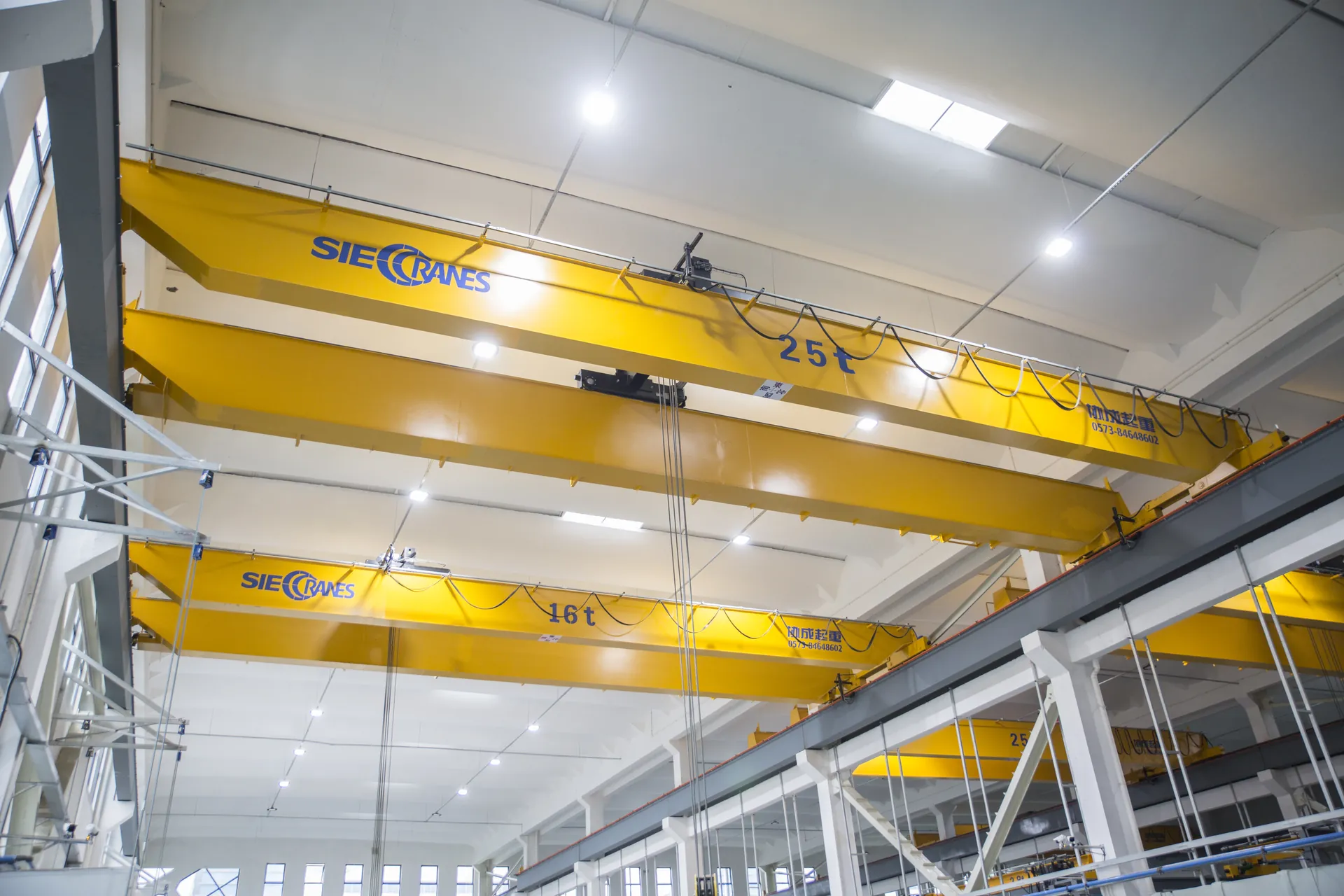
Middle East demand is tied to infrastructure mega-projects: Saudi Arabia's NEOM and giga-projects, UAE port expansions, and Qatar's post-World Cup industrial development. Buyers in this region tend to prefer European-standard or European-certified cranes, which creates an opening for manufacturers like SIEC that offer CE-certified equipment from a Chinese base.
| Region | Growth Driver | Key Crane Type | Certification Preference |
|---|---|---|---|
| Asia Pacific | Industrial expansion, new factories | Single/double girder, gantry | ISO, CE (for export-oriented buyers) |
| Europe | Fleet replacement, energy regulations | Double girder, suspension, jib | CE, FEM, EN standards |
| Middle East & Africa | Infrastructure, oil & gas, mining | Double girder, gantry, special crane | CE, ISO, FEM |
| North America | Manufacturing reshoring, warehouse | Single girder, jib, workstation | CMAA, HMI, local codes |
This is the biggest shift I have seen in the five years I have worked in this industry. Energy efficiency in overhead cranes used to be a nice-to-have — a checkbox on a spec sheet that nobody circled. In 2026, it is becoming a procurement requirement, especially in Europe and for multinational buyers with net-zero targets.
The main drivers:
EU Ecodesign regulations are expanding to cover industrial equipment. While overhead cranes are not yet directly regulated under the Ecodesign Directive, the trend is clear. Manufacturers selling into Europe are preemptively adopting energy-optimized designs because they know regulations are coming. The Demag V-type crane, announced in early 2026, is a good example: it runs without an external power supply for load handling, drawing energy from regenerative braking and a battery buffer. In practice, this means a 5-ton hoist can pick and move loads using regenerated energy alone for standard duty cycles, pulling grid power only for peak loads.
Variable frequency drives are now standard on most European-standard double girder cranes. VFDs reduce motor energy consumption by 15–25% compared to older stepped-control (contactor-based) systems. They also eliminate the mechanical shock of starting and stopping, which extends gearbox and brake life. SIEC Cranes includes VFD control as standard on all double girder models and offers it as an option on single girder, gantry, and jib cranes.
Carbon reporting mandates in the EU, UK, and parts of Asia are making buyers ask for energy data. Some tenders now require crane suppliers to provide estimated annual energy consumption per operating hour, not just motor rating. This is a relatively new requirement and catches some suppliers off guard.
I talk to buyers every week who are trying to figure out when to buy, what spec to aim for, and whether to go with a European brand or a Chinese manufacturer that builds to European standards. Here is my honest take on how the second half of 2026 looks:
If you are buying for a new facility in Europe or the Middle East, specify VFD control and FEM/CE certification upfront. Trying to retrofit these features later costs 30–50% more than factory installation. The price gap between a basic crane and an energy-optimized one is narrowing — about 8–15% on a typical double girder crane as of mid-2026.
If you operate in Asia Pacific or Africa, the supply base is expanding. More Chinese manufacturers are moving toward European-standard production lines, which means better quality and better certification at competitive pricing. SIEC Cranes is one example — we build to FEM/CE standards from our factory in Zhejiang.
If you are replacing an aging crane, 2026 is a good year to do it. Supply chains have stabilized after the post-COVID disruptions. Lead times for European-standard cranes from Chinese manufacturers are running 6–10 weeks, compared to 16–24 weeks from traditional European OEMs. The spec delta between the two options continues to narrow.
The crane industry is not exploding. It is growing at a steady clip, and the real action is concentrated in three pockets: energy-efficient models, smart-ready systems, and European-standard gear being sold outside Europe. If your purchase falls into any of those buckets, you have more supplier options and better pricing than if you are shopping for a basic, non-certified unit.
My advice for anyone buying in H2 2026: ask your supplier for three things before signing. Energy consumption data per operating hour. A CE/FEM compliance statement that is not boilerplate. And a lead time guarantee in writing. The ones who can deliver all three without backpedaling are the ones worth working with.
Contact SIEC Cranes for a free consultation and quote. We supply CE-certified European-standard overhead cranes — single girder, double girder, gantry, jib, and more — with VFD control and smart-ready options.
Request a Quote →