India Overhead Crane Market 2026: USD 1.2B at 7.3% CAGR — But Anti-Dumping Duties Are Reshaping Import Decisions
Market size, the September 2025 DGTR recommendation on Chinese cranes, and what importers should do about it.
India's overhead crane market is on track to reach roughly USD 1.2 billion in 2026, growing at 7.3% a year. At the same time, India's trade authority recommended five-year anti-dumping duties on certain Chinese cranes in September 2025, and the finance ministry has been reviewing it since. That combination — a growing market and a pending tariff — is changing how Indian buyers price, time and source their cranes. Here is what importers actually need to watch.
India is one of the fastest-growing crane markets outside China, and the numbers back that up. Reports published in late 2025 and early 2026 point to a market of roughly USD 1.2 billion in 2026 at a 7.3% CAGR, with steel, automotive and infrastructure projects doing most of the pulling. For context, the global overhead crane market is around USD 2.8 billion (2023) heading toward USD 4.5 billion by 2030, which means India is not just growing — it is growing faster than the global average.
| Market | 2026 Value (USD) | Growth Rate | Source |
|---|---|---|---|
| India overhead crane market | ~USD 1.2 B | 7.3% CAGR | World Metrics, 2026 (Industry estimates) |
| Global overhead crane market | ~USD 3.0 B (2025 est.) | ~USD 4.5 B by 2030 | Global Market Insights, 2023 base |
| European overhead crane market | USD 2.6 B (2022 base) | Germany ~18% share | World Metrics, 2026 (Industry estimates) |
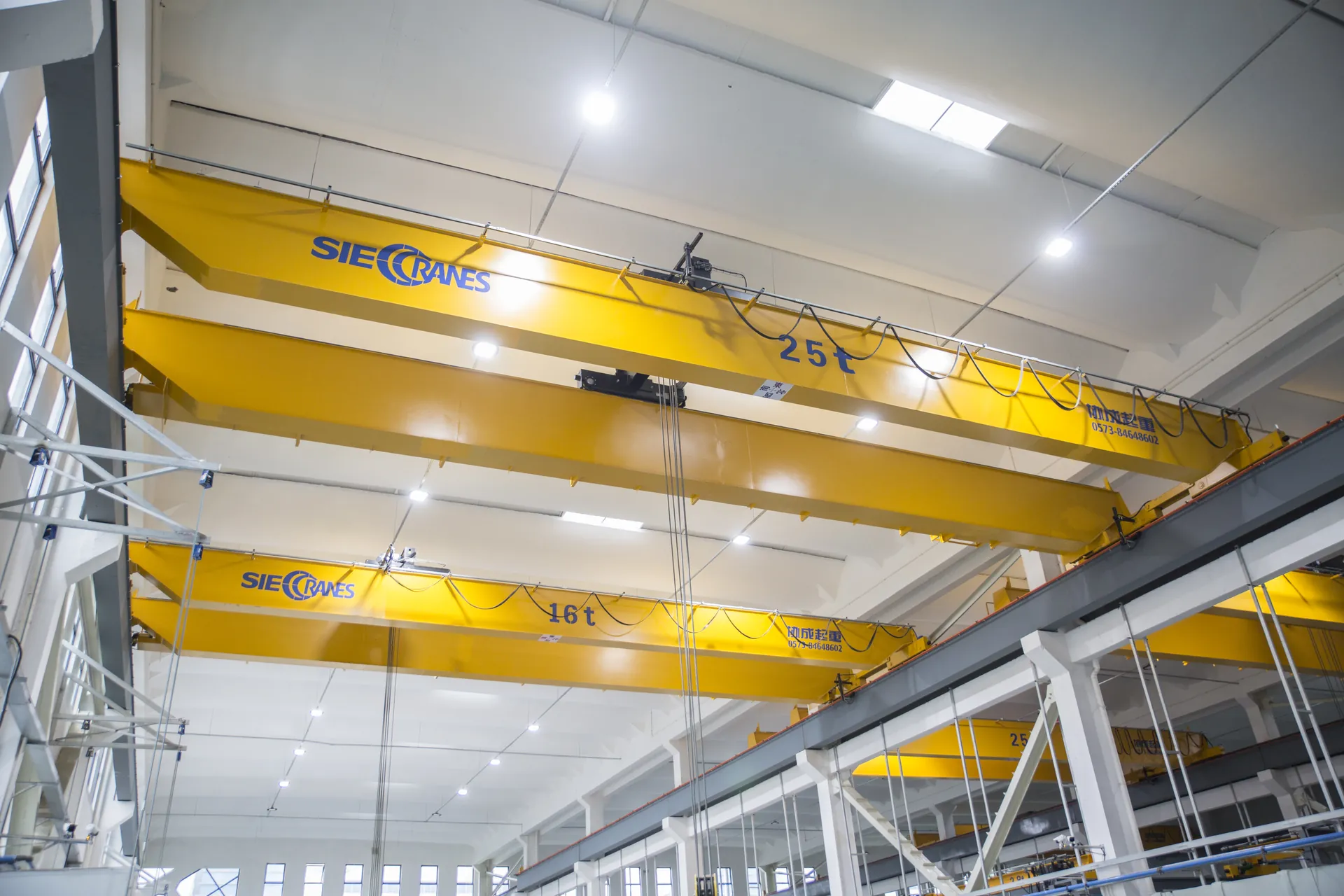
What drives the India number? Steel plants expanding capacity, metro rail construction in a dozen cities, renewable energy manufacturing (solar, wind and EV), and the broader Make in India push. A lot of these projects need double girder cranes in the 10-50 ton range and gantry cranes for yard work — exactly the segments where imports compete hardest with local production.
In September 2025, India's Directorate General of Trade Remedies (DGTR) concluded that certain cranes exported from China were being sold in India below normal value. It recommended definitive anti-dumping duties for a period of five years to protect domestic manufacturers. That much is confirmed by press coverage of the notification. What is not confirmed yet: the final duty rates, because the Ministry of Finance makes the final call and, as of mid-2026, it had not issued the definitive order in public form.
This is the part buyers tend to get wrong. A DGTR recommendation is not a duty. It is a step in a process. The sequence in India typically runs: petition → investigation → DGTR recommendation → finance ministry notification → definitive duty. Each step can take months, and the final rates can be lower or higher than what the recommendation implies. So if a supplier tells you "the duty is already in force," ask for the official customs notification number. If a supplier tells you "there is no duty at all," ask them to check again.
The DGTR case covers "certain cranes" as defined in the product scope of the investigation — the scope document, not the marketing name, decides. In practice, the case centers on overhead/ EOT cranes and related lifting equipment from China. But product scope language is technical, and it can include or exclude specific capacities, configurations and components.
| Crane Type | Typical India Demand | Duty Exposure |
|---|---|---|
| Single girder EOT (1-20 t) | Workshops, light manufacturing | Check scope; likely covered |
| Double girder EOT (10-100 t) | Steel, automotive, heavy industry | Check scope; likely covered |
| Gantry cranes | Yards, precast, ports | Depends on scope definition |
| Jib / workstation cranes | Assembly lines, cells | Often outside main scope |
| Hoists & components | Upgrades, retrofits | Confirm HS classification |
My advice: never rely on the crane type name alone. Get the HS code from your customs broker, then check whether that code appears in the scope notification. A 5-ton single girder crane and a 50-ton double girder crane are different HS lines more often than buyers expect, and only one of them may be affected.
Here is where I keep the math simple for buyers. Anti-dumping duty stacks on top of basic customs duty, IGST and the social welfare surcharge. Depending on the final rate, total landed cost for covered Chinese-made cranes could rise by an estimated 10-25% versus pre-duty levels. On a USD 40,000 double girder crane, that is roughly USD 4,000-10,000 of extra cost. On a larger steel-mill crane, the figure runs much higher.
Two caveats. First, these are Industry estimates — the actual impact depends on the duty rate the finance ministry sets, which was still pending in mid-2026. Second, duty exposure is not the same as total cost. A CE-certified European-standard crane from a manufacturer outside the covered scope can dodge the duty entirely while still costing 20-30% less than a European OEM unit. That gap is exactly why I tell Indian buyers to run a landed-cost comparison rather than react to the tariff headline.
If you are buying for a project in India right now, here is the checklist I walk through with clients:
1. Verify scope before you panic. Ask your supplier for the HS code and compare it against the DGTR scope document. Many buyers discover their specific configuration is not covered at all.
2. Get a landed-cost quote, not a factory-gate quote. A supplier who quotes FOB only is hiding half the picture. You want the full chain: FOB + freight + insurance + customs duty + IGST + inland logistics.
3. Ask about the duty documentation package. A serious exporter provides the scope analysis, HS classification and compliance paperwork in the quotation stage. SIEC Cranes includes this in every India-bound quotation because it saves weeks of back-and-forth at customs.
4. Time your order against the pending notification. If a definitive duty order is imminent, buyers sometimes accelerate orders to land stock before the effective date. That works only if your supplier can actually deliver on the timeline — a 6-10 week lead time from a Chinese manufacturer is realistic; a 16-24 week lead time from a European OEM probably is not.
India is a USD 1.2 billion crane market growing at 7.3% a year, and tariffs are not going to stop the projects — they are going to change who supplies them. The buyers who win are the ones who verify HS scope, compare total landed cost, and lock in suppliers who document compliance. The ones who lose are the ones who freeze because of a headline.
If you are sourcing cranes for India or anywhere in South Asia, send us your project spec. We will come back with a landed-cost estimate, the duty-scope check, and a realistic lead time — before you commit to anything.
Contact SIEC Cranes for a landed-cost estimate and duty-scope check. We supply CE-certified European-standard overhead cranes — single girder, double girder, gantry, jib, and more — with full export documentation.
Request a Quote →